
Running a Champaign County Sex Offender Check
The Illinois State Police Sex Offender Registry is the main public channel for a Champaign County sex offender check. ISP says the system is updated daily. It is free, does not require a login, and offers both person-based fields and geographic tools. Start broad with a name or choose Champaign in the county field. Then compare the public identifiers in a detail record. A shared name alone is too weak for a sound match.
Local agencies supply and verify registration data. Champaign, Urbana, and Rantoul police handle registrants who live within their city limits. The Champaign County Sheriff handles unincorporated addresses. Neither the county jail search nor a court docket replaces the registry because each system answers a different question. The registry reports statutory status and registration facts. A jail record reports custody, while a court file reports charges and outcomes.
Map Champaign County Registry Addresses
ISP's Map Your Neighborhood feature supports an address-based view of registered locations. Use it to understand the entries near a home, school route, park, or other place important to a family. The map is a discovery tool, not a fixed legal boundary. Illinois restrictions depend on the conviction and registration status, and the research found no universal statewide residency radius that applies to every registrant.
Read the map with care. A plotted point reflects the registered location in the public system, not a promise that the person is present at that moment. If an address appears wrong, send the concern to the registering police department, the Champaign County Sheriff for an unincorporated address, or the ISP registration unit. Do not investigate the location or approach anyone.
The official ISP registry image shows the state search entry point used for Champaign County lookups.
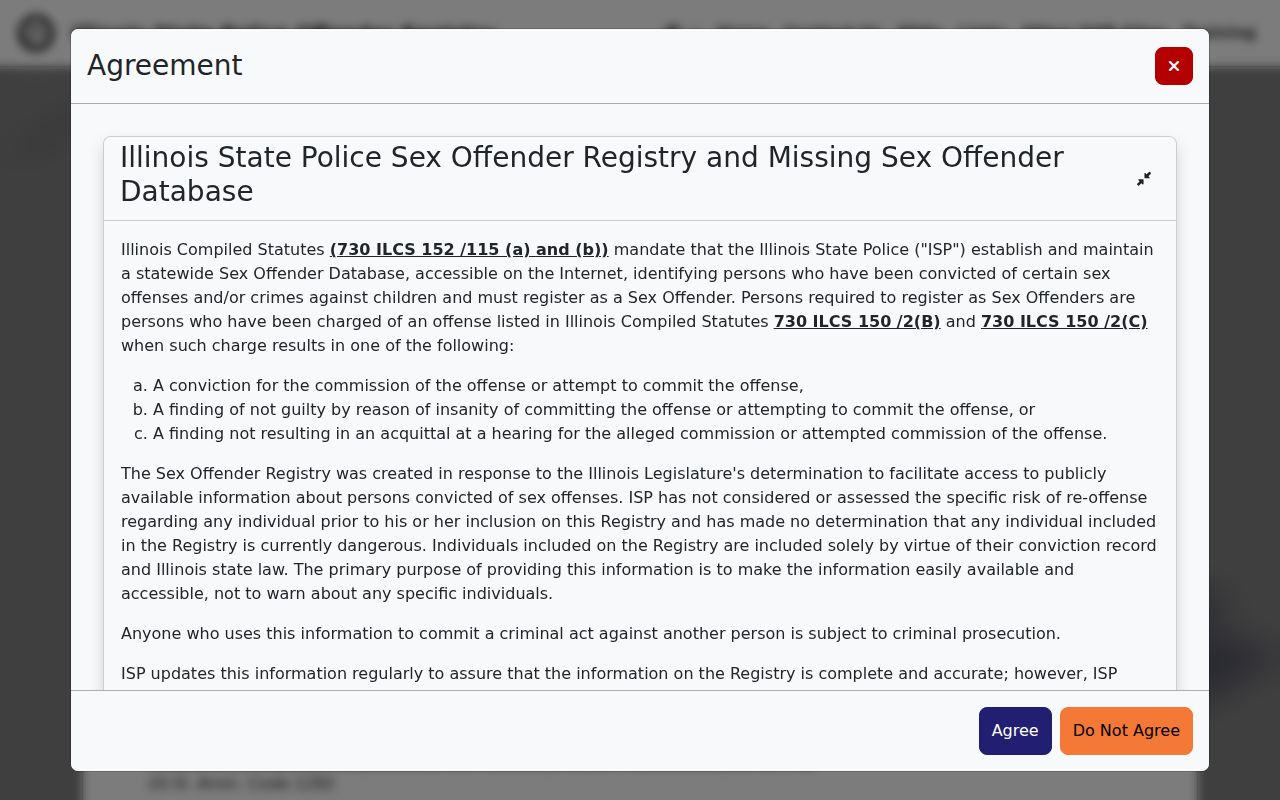
That state page is the proper starting place because its county and map tools draw from the same public registration system.
Searching the Illinois State Police Sex Offender Registry
Accept the registry conditions before entering the search. The form can work from a person's name, place, status, or offender category. ISP suggests beginning with first and last name when those are known. For a place-based Champaign County registry search, select Champaign in the county list, then narrow only when the result set calls for it.
- Open the official ISP registry and accept its terms of use.
- Enter a first and last name, or filter by Champaign County, city, ZIP, or another supported field.
- Compare names, birth date, physical traits, address, and registering agency before selecting a match.
- Open Details and read the offense, category, frequency, and compliance fields in context.
| Field Label | Type | Required | Notes |
|---|---|---|---|
| First and Last Name | Text | No | ISP suggests using both names first. |
| Date of Birth | Date/text | No | Useful for separating similar names. |
| City and ZIP Code | Text | No | Narrows the place searched. |
| County | Select | No | Choose Champaign for county results. |
| Status and Homeless | Select/checkbox | No | Includes compliance concepts and homeless registrants. |
| Offender Type | Select | No | Separates statutory Illinois categories. |
Search controls narrow results, but they do not prove identity. A former surname, alias, or changed address may affect a result. Preserve the registry's own labels when reporting an apparent error.
Champaign County Registration Offices
Registration follows the place of residence. Champaign Police handles addresses within Champaign, Urbana Police handles Urbana, and Rantoul Police handles the village. The Champaign County Sheriff is the route for unincorporated county addresses. Agencies verify residence at least annually and update the public photo. General registration and changes are usually due within three days, while the legal category controls the ongoing schedule.
Champaign County Sheriff
204 E. Main St.
Urbana, IL 61801
217-384-1204
Champaign Police
82 E. University Ave.
Champaign, IL
217-351-4545
Urbana Police
400 S. Vine St.
Urbana, IL
217-384-2320
Rantoul Police
109 E. Grove Ave.
Rantoul, IL
217-892-2103
The ISP Offender Registration Unit page describes the state unit that maintains rules and receives correction reports.
This state resource helps explain why a local correction must move through the registering agency into the ISP system.
What a Registry Profile Shows
A public profile combines identity clues, registration status, and offense data. It is only a subset of the internal registration file. Read each field for its narrow purpose. Compliance describes whether the system currently reflects required reporting, not a forecast of conduct. Offender type states a legal category, not a general risk score.
| Name and Aliases | Primary name and other names reported in the public file. |
|---|---|
| Photo and Description | Photo, birth date, sex, race, height, weight, hair, eyes, and identifying marks. |
| Registered Location | Current public address or location status and the registering county or agency. |
| Offense Details | Description, statute, AOIC code, class, conviction or adjudication date, jurisdiction, and public victim-age category. |
| Public Activity Fields | Public employment, school, and vehicle details when displayed. |
| Registration Status | Offender type, compliance, reporting frequency, and location status. |
Compare several nonrestricted fields. Two people can share a name, and one person can use more than one name. If the offense label is unclear, use the statute and jurisdiction shown rather than guessing from a short description.
Read Champaign County Registry Status Carefully
Three status ideas deserve special care. Compliant means the public system reflects compliance with reporting duties at that time. Non-compliant points to an unmet duty in the registry. Location unknown means the listed location has not been confirmed. None of these labels is permission for private inquiry or contact.
- Compliant
- The public record currently reflects required reporting.
- Non-compliant
- The registry reflects a failure to meet a reporting duty.
- Location unknown
- The responsible agency has not confirmed the registrant's location.
- Homeless registrant
- A person subject to weekly reporting for the applicable registration period.
Report a suspected error or unknown location to police, the sheriff, or ISP. Give the profile details and the exact item that appears wrong. Let the agency verify it.
Registration Requirements and Levels in Illinois
Illinois does not present its public registry as federal Tier I, II, and III. It uses statutory categories tied to frequency and duration. That difference matters when reading a Champaign County sex offender profile. The category shown should be read as written, with the conviction, release, and violation rules that affect the clock.
| Level / Tier | Duration | Verification Frequency |
|---|---|---|
| Sex offender | Ordinarily 10 years, subject to clock rules | Annual |
| Sexual predator | Natural life | Annual |
| First-degree-murder registrant | Natural life | Annual |
| Sexually Dangerous or Sexually Violent person | Natural life | Every 90 days |
| Qualifying SORA violation | Base duration plus extension or restart rules | Every 90 days |
| Homeless registrant | Applicable registration duration | Weekly |
The initial or annual registration fee is $100. General changes must usually be reported within three days. A profile may therefore change as the local agency verifies an address, photo, vehicle, school, or other reportable fact.
Cross-State Champaign County Registry Searches
A Champaign County search is not enough when a safety question crosses Illinois lines. Use the National Sex Offender Public Website to search participating jurisdictions through a national layer. Then open the source jurisdiction's official profile to confirm the current details and definitions.
The national tool does not make every state's categories equivalent. Illinois Sex Offender and Sexual Predator labels should not be translated into federal tiers. Search results also may differ because jurisdictions publish different fields and update on different schedules. For an Illinois address, the ISP record and the responsible Champaign County agency remain the direct verification routes.
Correcting Champaign County Registry Information
When a public profile appears wrong, record the profile name, registering agency, and the field in question. Contact the city police department shown for a city address or the Champaign County Sheriff for an unincorporated one. ISP's Offender Registration Unit is the state escalation route. This correction path is safer and more useful than trying to confirm an address in person.
The Champaign County Sheriff's inmate resources page illustrates a separate county custody system that should not be mistaken for registry status.
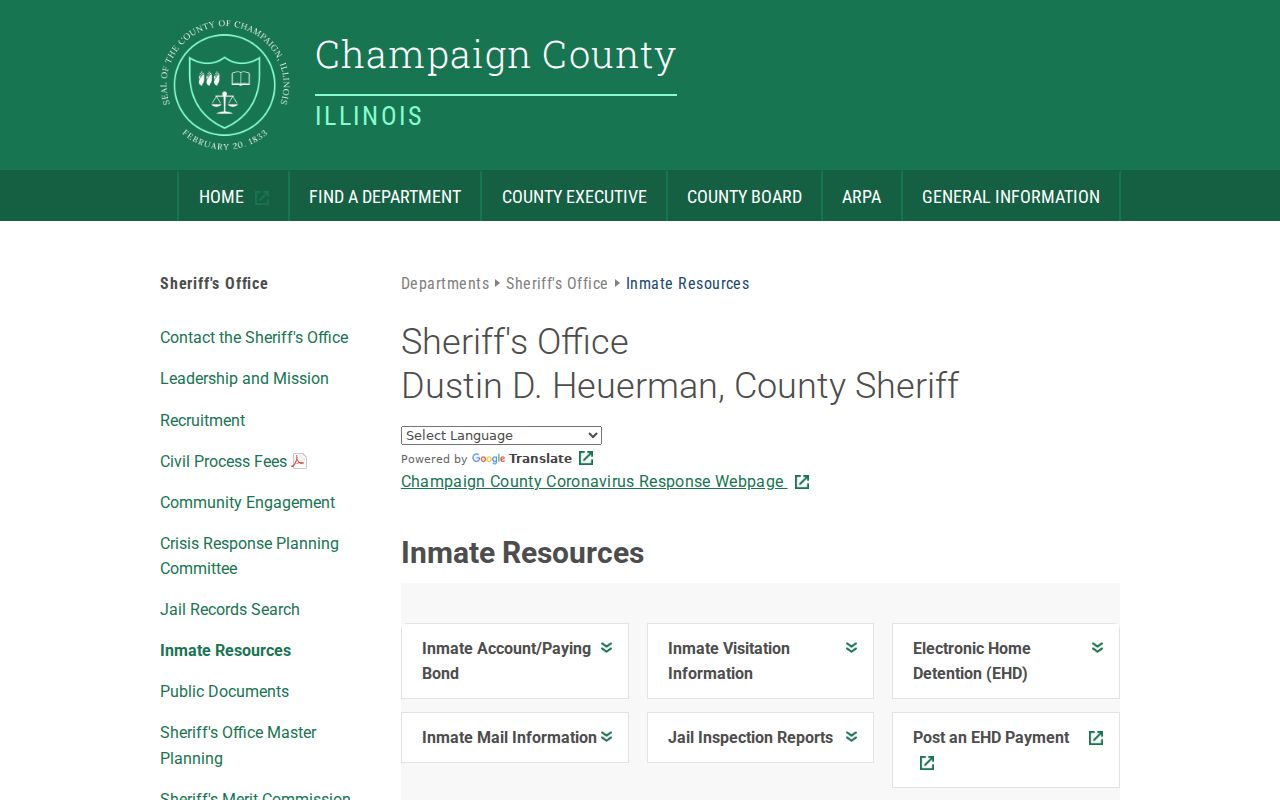
A jail entry answers a custody question. Only the ISP registry and registering agency confirm public sex offender registration data.
Provide facts, not conclusions. An apparent mismatch can reflect a recent move, reporting cycle, data correction, or mistaken identity. Non-compliant and location-unknown statuses belong with trained authorities.
Lawful Use and Community Notification
The registry exists for community awareness and safety planning. Verify the record, use the information to make calm plans, and contact the proper agency when a status or address needs attention. Do not confront a listed person, visit a registered address to investigate, or publish claims that go beyond the official profile. Illinois's Sex Offender Registration Act, 730 ILCS 150, governs registration and public information.
Use registry records lawfully. Misusing Illinois registry information to harass, threaten, intimidate, or confront a registrant or household can be a crime. Report concerns to law enforcement.
Safety comes from accurate information and responsible action. The public category is not a license for vigilantism or discrimination. Confirm important facts with ISP or the registering Champaign County agency.